Collective, environmental, artificial: Our 3 intelligences approach


Most design projects work with one kind of intelligence: the human kind, in a room, holding pens.
DNA proposes working with three at once — collective, environmental and artificial — and seeing what design can do that it could not do before.
That sentence is why we said yes. If you work on design, culture, heritage or the New European Bauhaus, it is also a fair preview of where European funding in this space is heading.
What DNA is
DNA — From Imagination to Action: Design, Narratives & Art as change drivers is a Strategic Topic Group of EIT Culture & Creativity, working on the relationship between the New European Bauhaus and design. It runs from September 2026 to April 2027 with nine partners, and CollectiveUP is one of them — as a partner, and as part of the team communicating what the group produces. (We introduced all six of our new groups in 6 rooms in Europe where the next decade of culture gets decided; this is the first close-up.)
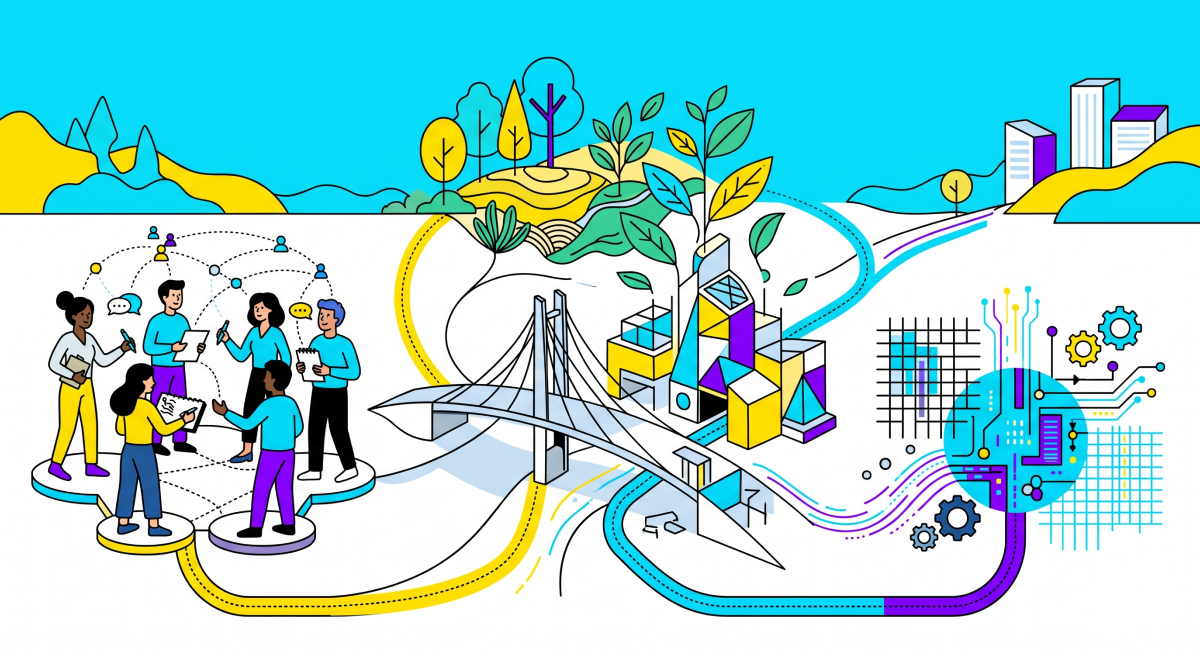
The premise is a problem most people in this field will recognise immediately. There is no shortage of imagination in European design and culture. There is a persistent, expensive shortage of the bridge between imagination and anything that actually happens on a street. DNA exists to build and test that bridge: how narrative-driven design and artistic practice can generate genuinely new societal value propositions, and support systemic, multi-territorial transformation rather than one beautiful pilot that nobody repeats.
The three intelligences, and why the framing matters
Plenty of initiatives describe themselves as “design and innovation”. DNA's distinctive move is to name three sources of intelligence and combine them deliberately:
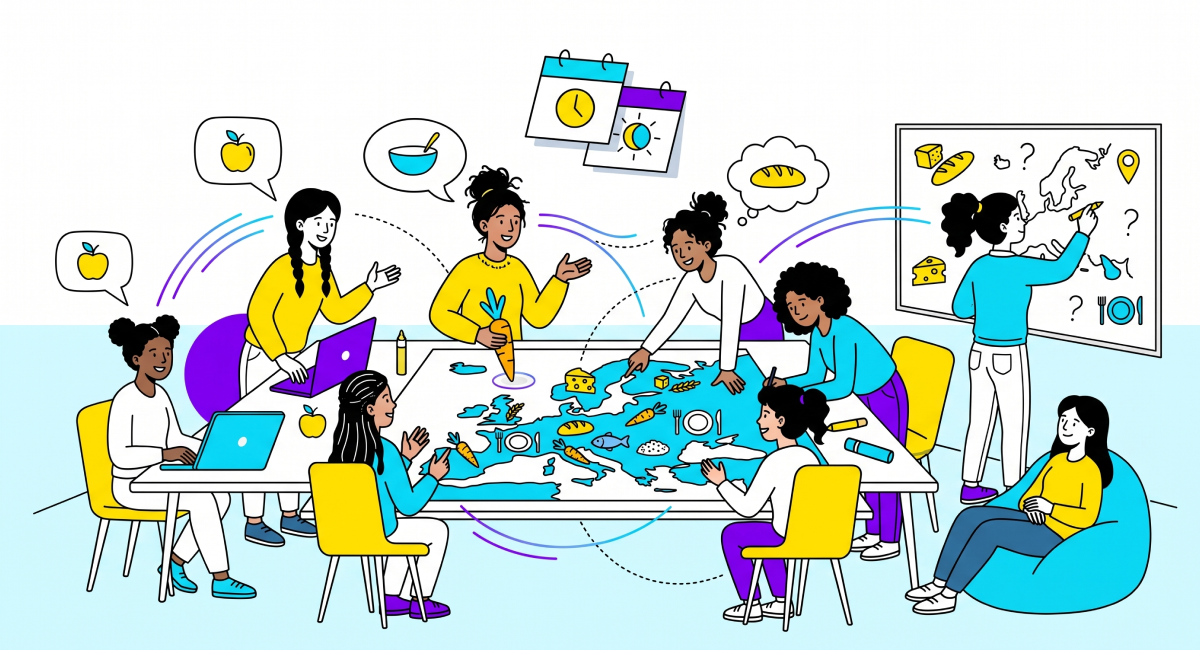
Collective intelligence — what a group knows that no individual in it knows, surfaced through co-creation rather than assumed.
Environmental intelligence — treating a damaged planet as an active participant in the design brief rather than a constraint written into the last paragraph.
Artificial intelligence — used as a creative and analytical collaborator, with the same scepticism we would apply to any collaborator.
Combine those with design practice, artistic practice, cultural engagement and future thinking, and you get a meaningfully different question: not “what should we make?” but “who and what gets to think with us while we make it?”
How the work is structured
DNA runs in three phases.
Phase 1 — Research and mapping. The consortium maps successful and unsuccessful cases across different types of space, producing a mapping framework, comparative evidence, an initial set of KPIs and a first toolkit. This phase includes analysis of four pilot projects across different spatial contexts — three digital, one in person. Pilot selection is under way, with the first confirmed pilot in Aarhus South Harbour.
Phase 2 — Interdisciplinary Co-Creation Lab. Partners and members of other Strategic Topic Groups come together to experiment with collaborative creativity, narrative, design, art and New European Bauhaus values — producing practice-based interventions and a participatory methodology for what the project calls acupuncture interventions: small, precise, deliberately placed.
Phase 3 — Positioning and future projection. A position paper, policy recommendations, KPIs, scalable methodology toolkits, a strategic roadmap for a future demonstrator, and calls for four acupuncture space exploration projects.
What CollectiveUP does in it
Our contribution is named explicitly in the project documentation: participatory foresight, co-creation, urban planning methods, replicability and strategic vision. We sit among the applied partners — the ones whose job is to drag research into contact with reality through living labs and co-creation workshops, and to ask the unfashionable question in every consortium meeting: yes, but would a real person use this?
We are also working on how DNA talks about itself. That is not a small task for a project whose subject is narrative. A Strategic Topic Group with eight months on the clock either communicates as it goes or arrives at April 2027 with excellent findings nobody outside the consortium has read.
The nine partners: MIN4CI (France), NTNU (Norway), Aarhus University (Denmark), CollectiveUP (Belgium), Materahub (Italy), Eötvös Loránd University (Hungary), ArtCentrica (Italy), Filmuniversität Babelsberg KONRAD WOLF (Germany) and Jagiellonian University (Poland).
Working on design, the New European Bauhaus, heritage, storytelling or creative-sector policy? A conversation with us now is worth more than one after a call opens. Write to liliana.carrillo@collectiveup.be with one line on what you are trying to change, and we will tell you where DNA could help.
And, quietly alongside it: INTouch
September also began INTouch — Intersectionality and Collaborative Online International Learning connecting Cultures and Minds, an Erasmus+ Cooperation Partnership in Higher Education coordinated by the Universitat Oberta de Catalunya. Eight organisations, six European countries, running to 2029. (New to it? Start with INTouch is active: Can online learning become more human?)
INTouch uses Collaborative Online International Learning (COIL) — five transnational COILs connecting students, lecturers and social communities across borders, each examining what drives supportive behaviour from an intersectional perspective, with at least 300 students and 12 lecturers.
One number from the consortium's own baseline explains why it exists: 77% of 215 students surveyed had never taken part in an international activity. Internationalisation in European higher education is, for most students, a thing other people do. COIL puts the international experience inside the regular curriculum, where everyone can reach it.
CollectiveUP is the only partner that is not a university, and we lead Work Package 4 — Dissemination and Sustainability: getting what INTouch learns out of the academy and into the hands of NGOs, schools, youth organisations and policymakers who can use it. Higher education institutions curious about COIL: we would like to hear how you approach inclusive internationalisation, and whether the INTouch outputs would be useful to you when they land.
Work with us
If you need a partner who does participation properly — foresight, co-creation, living labs, and the communication that makes the results travel — that is the whole point of us. Email liliana.carrillo@collectiveup.be
CollectiveUP participates in STG DNA as a partner of EIT Culture & Creativity, a Knowledge and Innovation Community of the European Institute of Innovation and Technology (EIT), a body of the European Union.
INTouch (Project No. 2026-1-ES01-KA220-HED-000467807) is co-funded by the Erasmus+ programme of the European Union. Views and opinions expressed are those of the authors only and do not necessarily reflect those of the European Union or the granting authority.
#EITCultureAndCreativity #NewEuropeanBauhaus #DesignForChange #STGDNA #INTouch #COIL #Intersectionality #HigherEducation #CoCreation #ParticipatoryForesight #ErasmusPlus #CollectiveUP