More than proximity: Next week’s Ghent classroom & 2 CONIFER reports


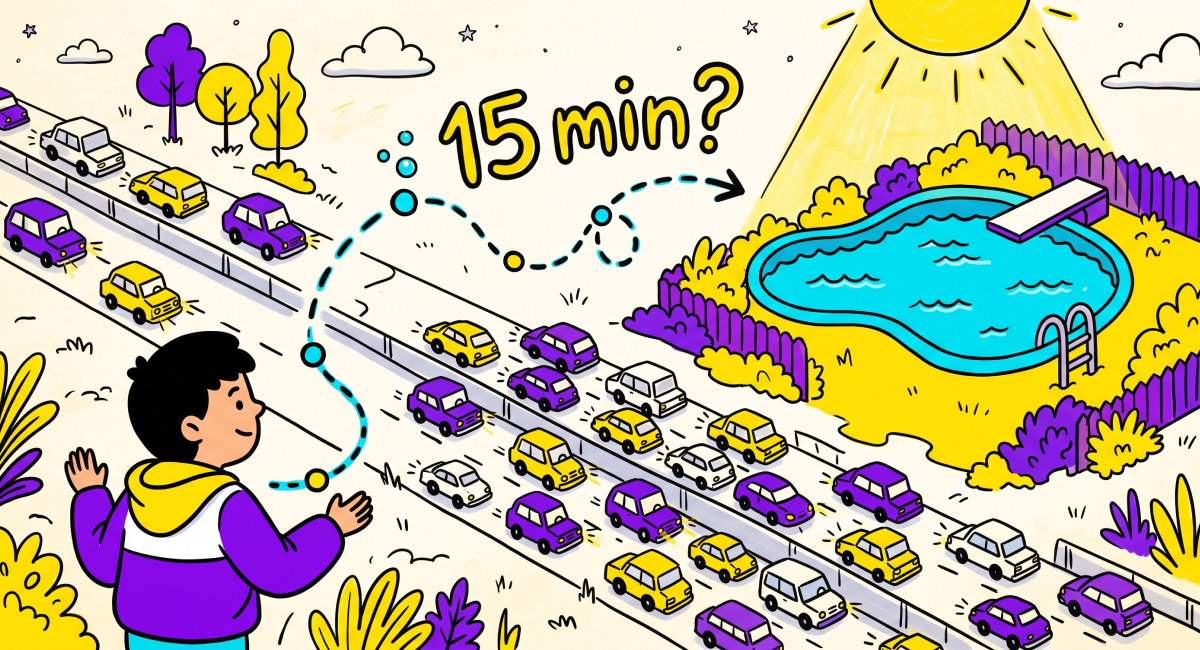
A routing app says the swimming pool is eight minutes away. It does not know about the road a ten-year-old was told never to cross alone. So is a 15-minute city actually fifteen minutes for the people who live in it?
That was the question CONIFER spent its first research phase asking, in two directions at once. The answers are now public, free to download, and they say something that should make a few urban plans uncomfortable. We also met in Cologne on 1 and 2 October to close that phase, and next week the research turns into a classroom. Here is all three.
Report one: Ask the children, because they notice first
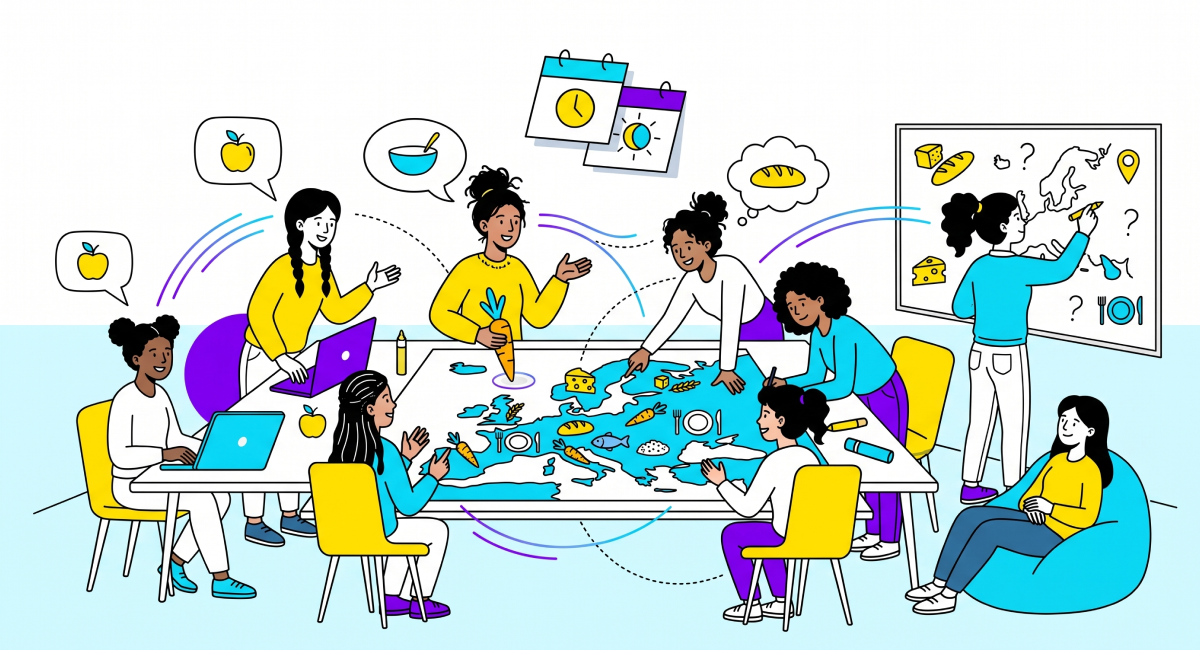
D3.1 — Report on 15mC perceptions in each civic lab asks children and young people in all six labs (Brussels, Budapest, Cologne, Ghent/Kortrijk, Matosinhos and Toruń) how they actually experience their neighbourhoods. The method is participatory throughout: mapping, dialogue, place-based assessment, creative expression, and a purpose-built web app that sets computer-estimated travel times against young people's own estimates.
The gap between those two numbers is the finding. Proximity is necessary but not sufficient. Safety, the quality of the environment, the design of public space and whether there is any reason to stay once you arrive all decide whether a young person goes. The report names a structural gap between the policy language of proximity and the lived reality of children and youth.
Why children? Because they are the most sensitive instrument available. A street that is hostile to a ten-year-old is usually quietly hostile to an older person, a wheelchair user or a parent with a pram. The child simply registers it first, and says so.
Report two: People support sustainable mobility in a thoroughly bad mood
D3.2 — Report on 15mC discourses in each civic lab, which CollectiveUP led, looks at the same six cities from the outside. We coded 109 local news articles by hand, and analysed a large body of social media conversation with topic modelling, stance detection, sentiment analysis and bias detection, with a human verification layer over the automated classification.
The headline: support for sustainable mobility outweighs opposition, in every city and in both data streams. Resistance is real but narrow. It concentrates on specific measures, such as car restriction and car-free school streets, rather than on sustainable mobility as an idea.
The finding with the most practical bite is about tone. Social media messages skew strongly negative, but negative tone turned out to be a poor predictor of an opposing position. If your communications strategy is calibrated on sentiment rather than stance, you are probably overestimating opposition and under-defending measures that already have majority support.
Planning a mobility measure and want to know how it will land before you announce it? That is the work we do. Write to liliana.carrillo@collectiveup.be with the measure and the city, and we will tell you whether a discourse analysis would help.
Cologne: Where the evidence met the plan
The consortium met on 1 and 2 October at the Zukunftslabor in Cologne, hosted by the Wuppertal Institute and chaired by VUB. It was the meeting that only happens once: the research is finished, the fieldwork has not started, and the partners must decide whether the evidence will change what they do next.
CollectiveUP led or chaired a good part of the agenda: deliverable D3.2 and Task 3.5 (biases in mobility cultures), Task 2.2 on lab coordination and training, Task 4.3 on computer games for visioning 15-minute cities, Work Package 6 on knowledge transfer including Task 6.3 on policy and practitioner trainings, and Task 7.3 on communication and dissemination.
Day two was largely a training workshop: creative-method leaders teaching civic lab implementers how their methods really run, with an "ask me anything" session attached. Unglamorous, and the most useful thing on the agenda. A method that only works when its inventor is in the room is not a method; it is a performance.
Next Thursday, the theory meets a classroom
On Thursday 29 October our Ghent civic lab starts its visioning season with young people at a partner secondary school. Six afternoon sessions run to mid-December, each pair using a different creative method:
- 29 October and 12 November — gamification, in Minecraft Education. Young people build the neighbourhood they want, at a scale where changing your mind is free.
- 19 and 26 November — art and design, developed with the Institute for Art and Innovation in Berlin.
- 3 and 10 December — generative AI, turning a description of a future street into images and narratives you can argue with.
Three methods, one question: what should this neighbourhood be like in fifteen years, and who decides? We run all three on purpose. Some young people will talk through a game controller who would never talk in a circle. Some will draw what they cannot say. Some will only engage once a machine produces something visibly wrong and they get to correct it. Participation design is mostly about giving people more than one door.
If this is your terrain
Cities, transport agencies and school networks: we run civic labs, discourse analysis, participatory foresight and creative visioning with young people, and the methods are documented well enough to hand over.
Researchers and consortium leads: D3.1 and D3.2 are open to build on, and we are looking for partners for upcoming Horizon Europe and DUT calls where participation and youth mobility are central.
Both start the same way: liliana.carrillo@collectiveup.be. And if you do only one thing, download the two reports.
CONIFER has been funded by Innoviris (Belgium), Flanders Innovation and Entrepreneurship (Belgium), DLR Projektträger (Germany), the National Research, Development, and Innovation Office (Hungary), Fundação para a Ciência e a Tecnologia (Portugal), and The National Centre for Research and Development (Poland) under the Driving Urban Transitions Partnership, which has been co-funded by the European Commission. Views and opinions expressed are those of the authors only.
#CONIFER #DUTPartnership #15MinuteCity #UrbanMobility #CivicLabs #YouthParticipation #ParticipatoryForesight #Gamification #SchoolStreets #Ghent #CollectiveUP