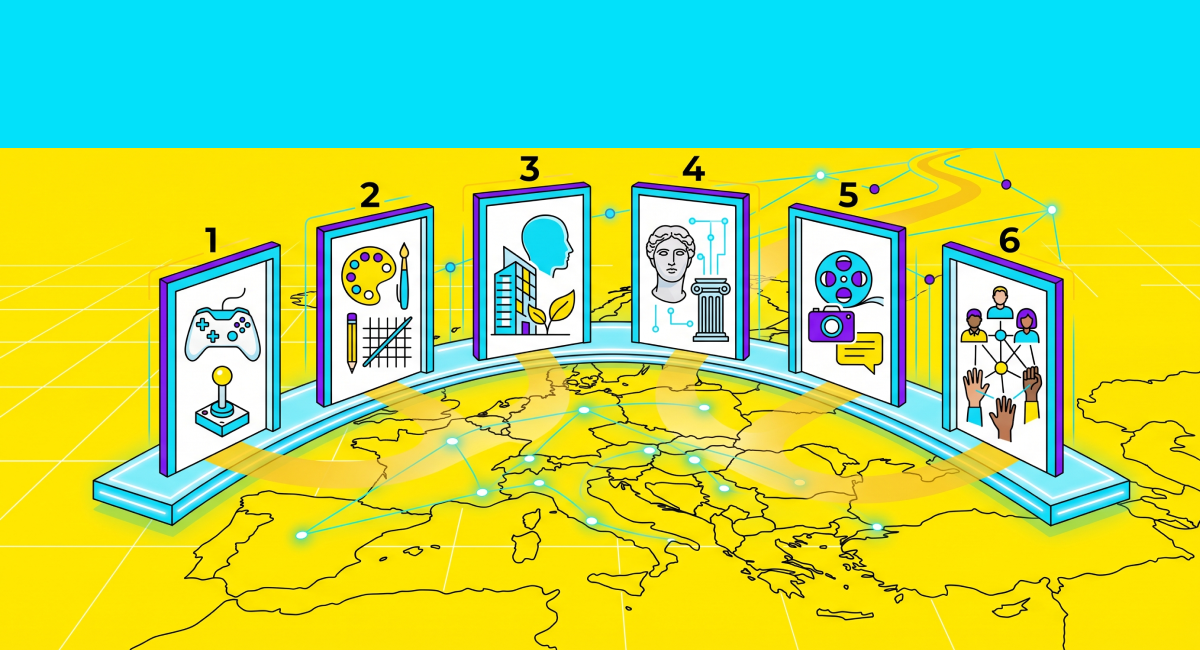
InTouch is active: Can online learning become more human?


Lucrezia Crescenzi, our InTouch project coordinator, happily wrote to us:
Persistence pays off.
After four months of silence following the submission of the proposal, that was the opening line of her email telling the InTouch consortium that the project had been funded.
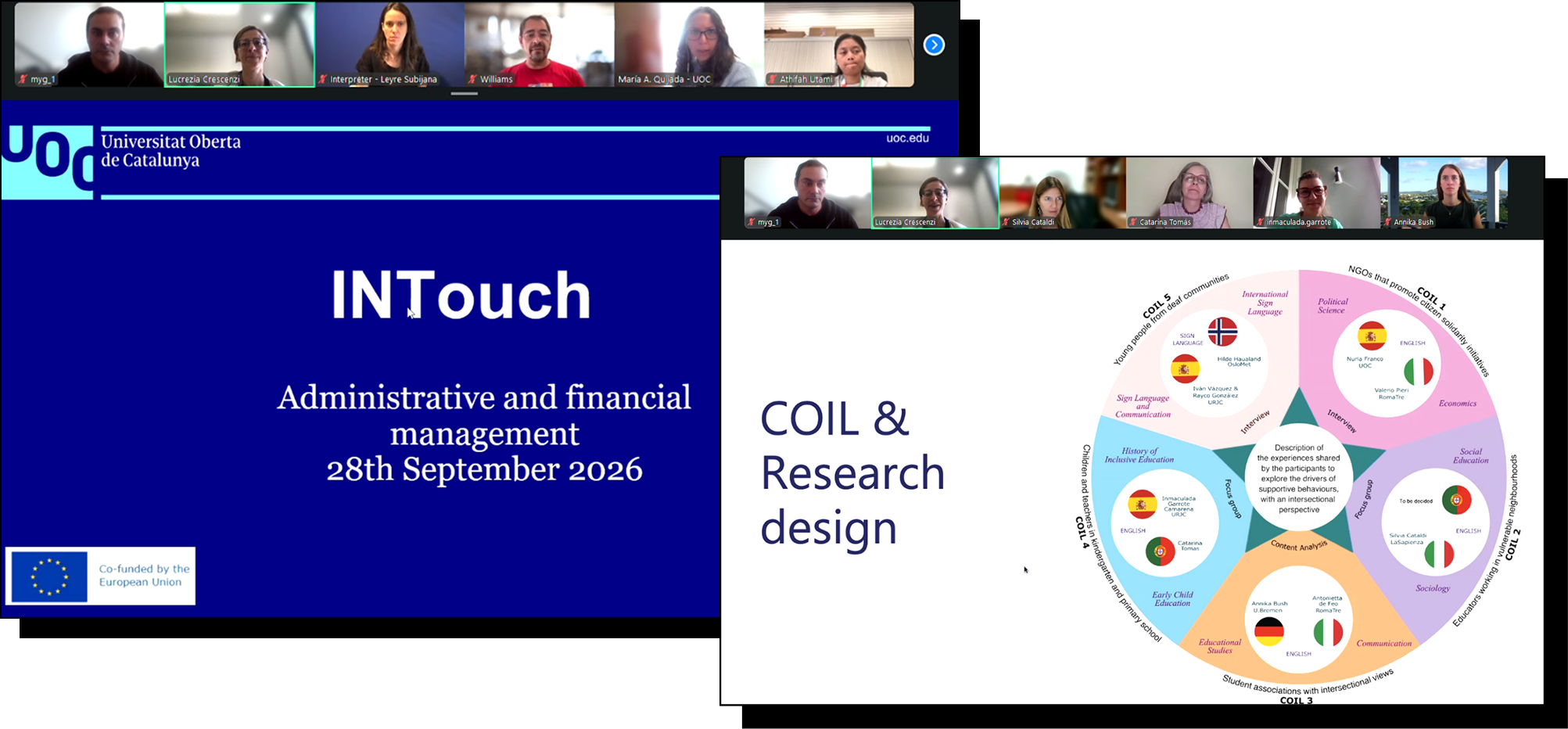
On Monday, we finally got everyone together online for the project kick-off.
Eight organisations from six European countries. Universities, researchers and organisations working across different parts of higher education and society, coming together around a fairly simple question:
How can international education become more inclusive, more connected and more useful to the people taking part in it?
That is where INTouch begins.
What is INTouch?
INTouch stands for Intersectionality and Collaborative Online International Learning connecting Cultures and Minds. It is an Erasmus+ Cooperation Partnership in Higher Education coordinated by the Universitat Oberta de Catalunya (UOC).
The project uses Collaborative Online International Learning, or COIL, to connect students, lecturers and social communities across borders without requiring everyone to physically travel.
Over the course of the project, five transnational COILs and interdisciplinary case studies will explore the drivers of supportive behaviour from an intersectional perspective. At the same time, students and lecturers will develop digital, intercultural and transversal competences.
In other words, this is not simply about putting an international classroom online.
It is about exploring what happens when people from different backgrounds, cultures and contexts learn together, and how higher education can create more inclusive environments for that to happen.
Why does it matter?
Internationalisation in higher education is often associated with mobility. Go somewhere else, meet different people, study for a while, come back.
But not everyone has the same opportunity to participate in that model.
COIL creates another possibility: bringing international and intercultural experiences into the learning environment itself.
INTouch aims to establish an accessible internationalisation model that integrates an intersectional perspective into higher education curricula. It also seeks to generate evidence and practical recommendations that can support social inclusion and diversity across European contexts.
At least 300 students and 12 lecturers are expected to participate in the COIL activities.
The project will also produce reusable learning and research resources, case study materials and practical recommendations for higher education institutions, educators, civil society organisations and policymakers.
And where does CollectiveUP come in?
This is the part we are particularly interested in.
CollectiveUP is the only non-university partner in the consortium, joining seven universities across Spain, Italy, Germany, Portugal and Norway.
Our role is not simply to watch the research happen.
We will contribute to dissemination, sustainability, networking, communication and knowledge transfer throughout the project. The aim is to help knowledge move beyond the academic environment and become accessible and useful to the wider communities that can benefit from it.
That also means sharing what happens along the way.
What works. What does not. What participants learn. What can be reused. And what can potentially be applied somewhere else.
So, what happens next?
The project has only just started.
There is a lot of work ahead, but also a lot to discover. The first online meeting brought the consortium together and set the project in motion. Now the work begins.
INTouch is supported by the European Union through the Erasmus+ programme and will run until 2029.
We will be following the journey here, sharing the developments, ideas and lessons that emerge along the way.
Because sometimes persistence pays off.
And sometimes, getting the right people into the same virtual room is where the interesting part finally begins.
Follow CollectiveUP for the next steps of INTouch.