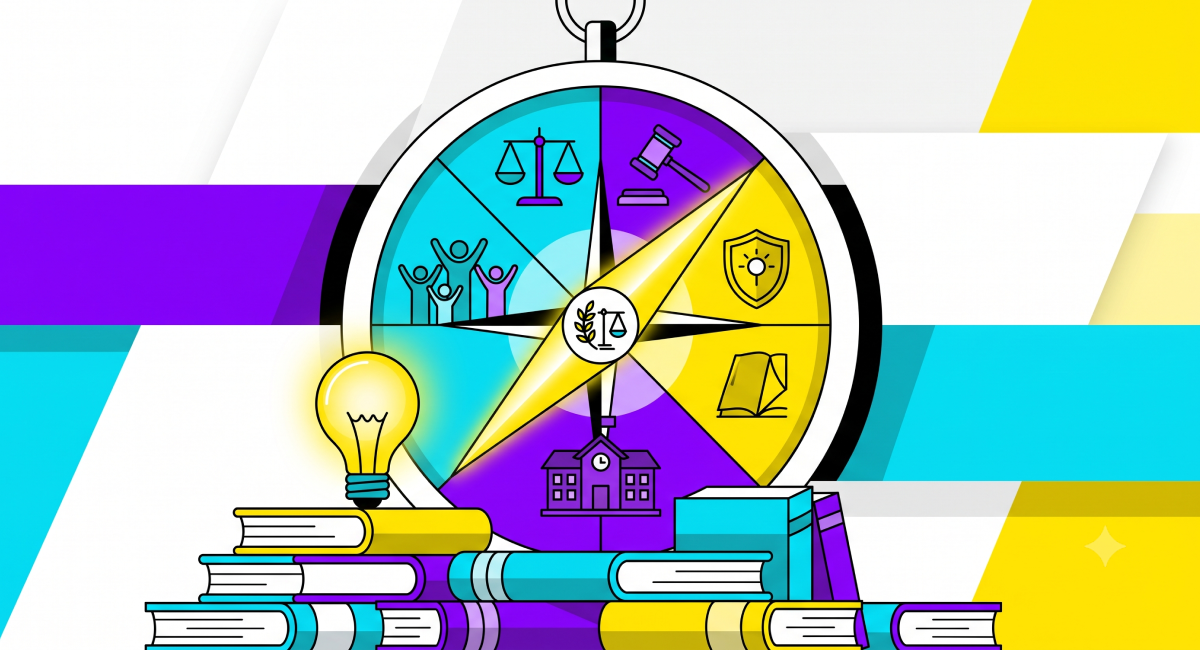
Education & rights: A legal & ethical compass for schools


What does a school actually owe a child — legally, not just morally? Most educators can recite the values: dignity, participation, inclusion. Far fewer can point to the legal ground those values stand on, or explain what they require in a real classroom on a rainy Tuesday. That gap between principle and practice is exactly what the first FutureEd guide sets out to close.
A framework written by people who know the law — and the classroom
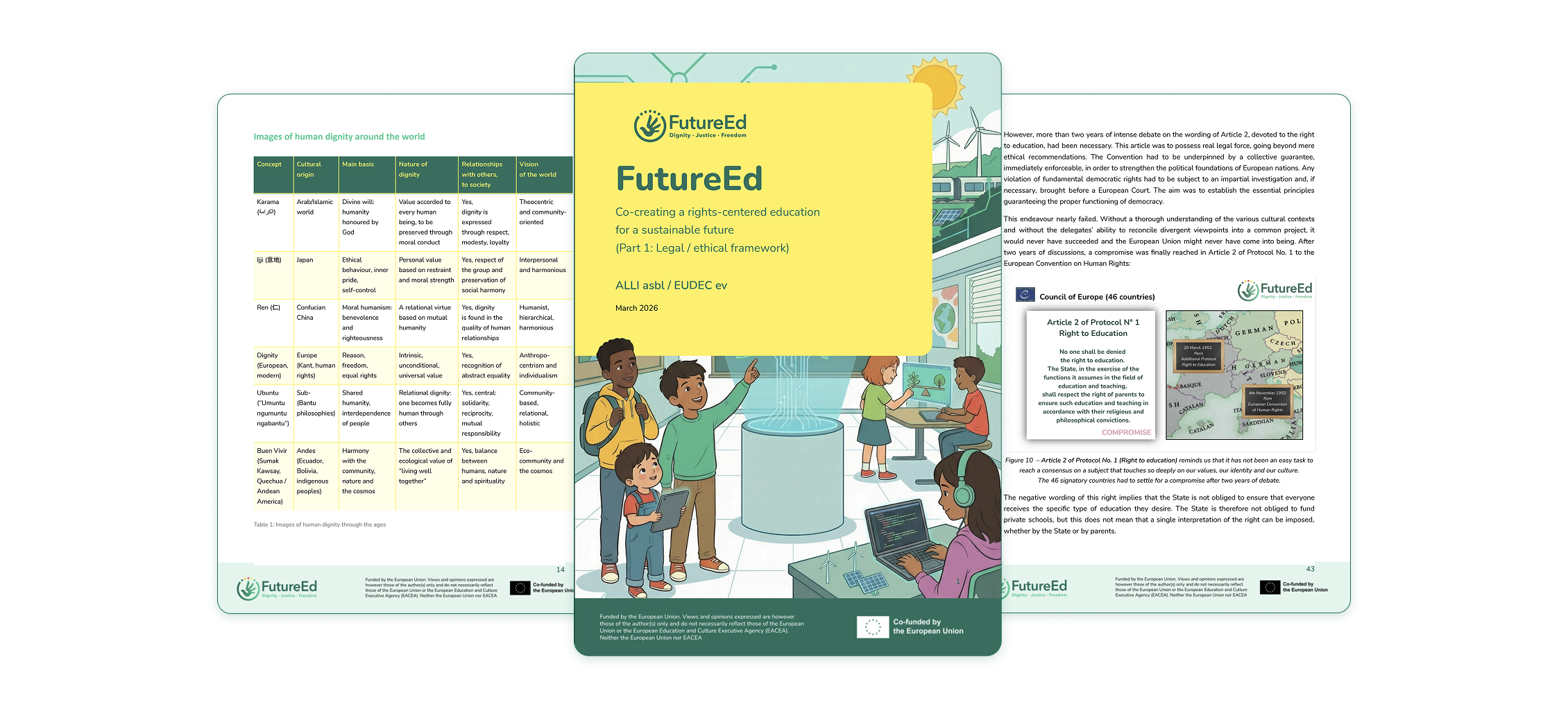
The guide — a legal and ethical framework on Rights-Centred Education — was developed by our FutureEd partner ALLI asbl in Luxembourg, an organisation that works at the intersection of law, ethics and education. Rather than another aspirational manifesto, it maps the actual legal architecture of children's rights in education — from the UN Convention on the Rights of the Child to European frameworks — and translates it into the questions every school should be able to answer: Where does a child's right to participation begin? What are the limits of school authority? What does dignity require in disciplinary practice, in dress codes, in the canteen?
Why schools need this now
When we ran our FutureEd youth focus group this summer, teenagers told us about rules that were "half targeted" at certain religions, about student councils that exist "for show," and about support for vulnerable classmates that depends on other children's generosity rather than the school's duty. None of those stories involved bad people — they involved institutions without a compass. A rights framework gives school leaders something better than good intentions: a way to test their own rules, practices and habits against the standards children are actually entitled to.
What's inside, and who it's for
The guide works as a reference and a self-assessment tool in one. School leaders can use it to audit policies before conflicts arise. Teachers can use it to understand the "why" behind rights-centred practice. Parents and school boards can use it to ask better questions. And organisations like ours use it as the legal backbone for co-creation work with schools — because participation without a rights foundation is just consultation theatre. It is the first of three FutureEd guides: next week we present the rights-centred education guide with best practices from democratic education (with EUDEC), and the week after, our Digital Rights Awareness Guide built around "Zara & the Glowing Realm."
Being improved right now — publish-ready this August
Like all FutureEd deliverables, the framework is being refined through feedback from educators and partners, with the improved version ready this August. You can already explore the guide in our project page.
Would your school, network or organisation like to put this framework to work — through a workshop, a training, a policy review or a joint EU project on rights-centred education? That is exactly what we do. Write to liliana.carrillo@collectiveup.be and we will find the format that fits you.
FutureEd is an Erasmus+ (KA210) project co-funded by the European Union, developed with our partners ALLI asbl and EUDEC. Views and opinions expressed are however those of the author(s) only and do not necessarily reflect those of the European Union or the European Commission.
#FutureEd #ChildrensRights #RightsCentredEducation #LegalFramework #ErasmusPlus #ALLI #CollectiveUP