Revolutionizing urban life


At CollectiveUP, we believe that the future of our societies depends on how we design our shared spaces. We are thrilled to share a groundbreaking new resource that aligns perfectly with our mission to foster high-quality societal life: the Sustainable Proximities methodology (PDF)
Co-developed by the Global Observatory of Sustainable Proximities—a powerhouse collaboration between C40 Cities, UN-Habitat, UCLG, and the Chaire ETI research lab—this methodology offers a transformative blueprint for local governments to rethink urban planning from the ground up.
Moving beyond the "15-minute city"
While many are familiar with the "15-minute city" model championed in Paris, this new report expands that vision into a globally adaptable framework of sustainable proximities. It recognizes that whether you live in a high-density metropolis or a low-density rural area, access to essential social functions should be a right, not a privilege.
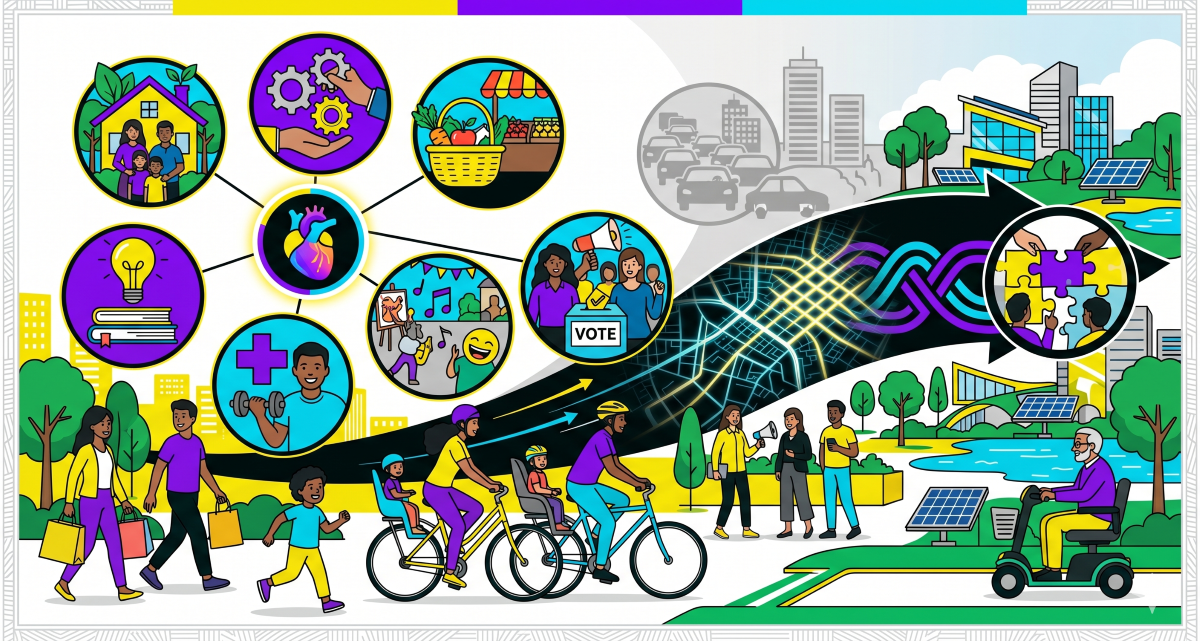
The methodology is built around six essential social functions that every resident needs to thrive:
- Living: Diverse, affordable, and safe housing.
- Working: Equal and well-distributed livelihood opportunities.
- Supplying: Easy access to everyday goods and food security.
- Learning: Educational and vocational training for all ages.
- Caring: Accessible healthcare and spaces for physical well-being.
- Enjoying: Inclusive public spaces for culture and social interaction.
- Governing (The New Addition): The Observatory has added a seventh function—active and inclusive local governance—to ensure cities are built with people, not just for them.
A 5-step process for transformation
This isn't just theory; it's a practical, 5-step roadmap for urban leaders and practitioners:
- Project Inception: Setting clear objectives and building a multi-disciplinary team.
- Data-Driven Proximity Analysis: Using the High Quality of Societal Life (HQSL) Index to map exactly where service gaps exist.
- People-Driven Co-Creation: Engaging citizens through creative tools like the Proximities Fresk workshop to design tailored solutions.
- Actions for Implementation: Integrating proximity into binding urban plans and land-use regulations.
- Monitoring & Mainstreaming: Evaluating impact through 23 key indicators to ensure long-term sustainability.
Why proximity matters now
As we face global housing crises and the urgent realities of climate change, proximity-based planning is no longer optional. It reduces car dependency, lowers emissions, fosters social cohesion, and—most importantly—gives people back their most precious resource: time.
"We believe that cities promoting local life where essential social functions are accessible within a short walk or bike ride from people’s homes are more inclusive, liveable, and sustainable."
At CollectiveUP, we are inspired by this global movement to create cities that truly serve humanity. Let’s stop planning for cars and start planning for people. Contact us today!