Reimagining Ghent Dampoort through youth eyes


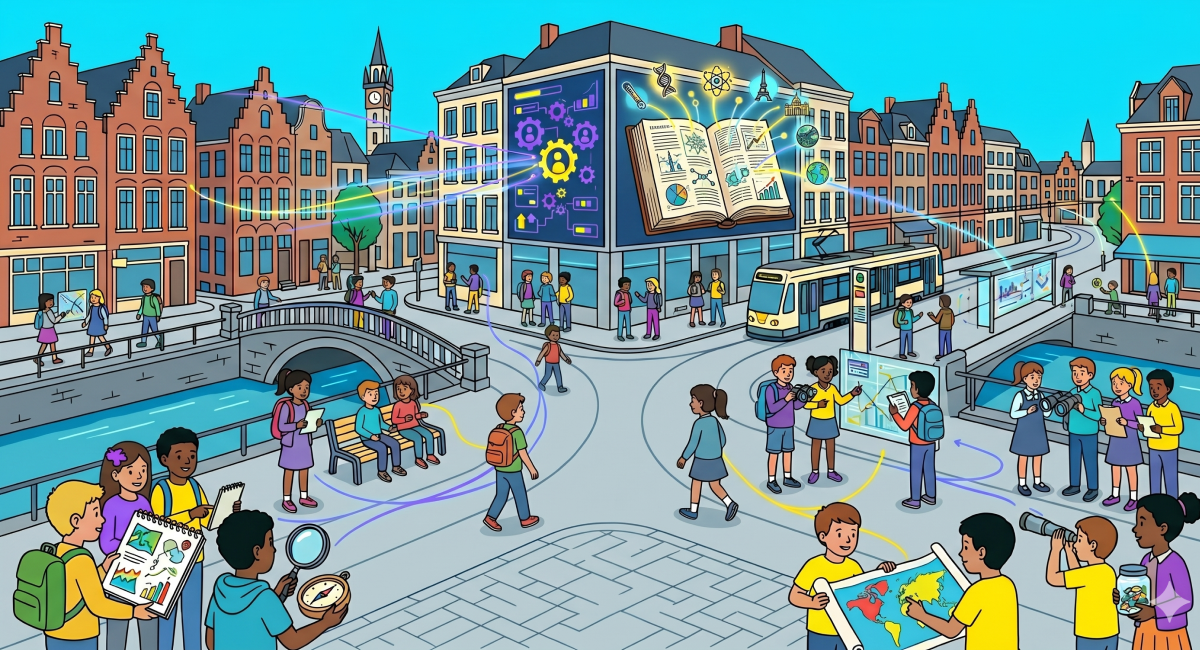
If you want to know what’s really happening in a neighborhood, don’t just look at the city’s official maps, ask the people who navigate its obstacles every single day. For our latest CONIFER project activity, Liliana Carrillo took 15 groups of young researchers into the heart of Ghent’s Dampoort district. Their mission was to move beyond being passive residents and become active urban analysts.
What they discovered was a striking contrast: a neighborhood with incredible connectivity and commercial energy, yet one that feels increasingly "tense," inaccessible, and, for a teenager, a bit boring.
The following findings represent a collective vision from our youth for a safer, more empathetic Ghent.
1. Reclaiming the streets: Traffic safety & enforcement
The most visceral feedback from all 15 groups concerned the feeling of "traffic tension." While the city center of Ghent feels like a cyclist’s paradise, the arterial roads around Dampoort tell a different story.
- The Speed Gap: On the Dendermondsesteenweg and Antwerpsesteenweg, "30 km/h" is often treated as a suggestion rather than a rule. Students reported cars "flying" through residential corridors. The consensus? We need more than just signs. The youth are calling for increased enforcement, fixed speed cameras and mobile police checks to make the walk to school a safe one.
- The Dampoort Conflict: A frequent safety "black spot" identified is the intersection where cyclists and pedestrians often get the green light simultaneously. This creates a dangerous game of "traffic chicken." The proposed fix: Synchronized bicycle traffic lights that separate turning cycles from pedestrian crossing phases.
2. Radical inclusivity: The sidewalk test
One of the most moving parts of the CONIFER field research was watching these young people look at their city through the eyes of others, specifically the elderly, wheelchair users, and parents with strollers (buggy’s).
- The Obstacle Course: Between loose tiles, missing paving stones, and dangerous cobblestones (kasseien), our sidewalks are failing the basic test of mobility. Add in delivery scooters and commercial signs blocking the path, and you have an environment that actively excludes vulnerable residents.
- The Portable Ramp Initiative: Students noticed that a single step at the entrance of a local bakery or café is effectively a wall. To fix this, they suggest a city partnership to provide businesses with portable ramps. It’s a low-cost, immediate solution to make our local economy truly inclusive.
3. Escaping the "Toddler Trap"
Ghent excels at building beautiful playgrounds for five-year-olds. However, our research uncovered a "recreational vacuum" for those aged 12 to 18. If a public space isn't a sandbox, it’s often just an empty, grey square.
The youth are demanding Actionable Recreation:
- Parkour and Climbing: Urban structures that challenge strength and agility.
- Hanging Ziplines: Larger structures designed for older youth.
- Active Plazas: We identified several underutilized triangular plazas near the school and library. Students want to see these "dead zones" converted into multi-use sports courts for football and basketball.
4. A Natural, greener buffer
"Grey and somber" was a recurring description of the Dampoort transit corridor. The youth aren't looking for ornamental plants that die in a few weeks; they are looking for a functional ecosystem.
- Underground Waste Solutions: The sight and smell of trash bags sitting on the sidewalk was a major point of frustration. It blocks paths and attracts pests. The solution is the transition to underground waste containers to keep our streets clear and encourage better sorting (PMD/GFT).
- Urban Sanctuaries: A unique proposal emerged to establish fenced nature sanctuaries within parks like Azaleapark, zones where humans are prohibited, allowing local wildlife to thrive undisturbed.
5. Social pulse: Dignity at the Transit Hub
Finally, our young researchers looked at the social fabric of Dampoort Station. They didn't ignore the fact that many people use the station as a primary shelter during the winter.
Instead of calling for "clearing" the area, they called for better alternatives. They proposed that the city establish more "Open House" shelters, dedicated social centers that provide warmth, food, and clothing. Their vision is a city where the transit hub can function efficiently because its most vulnerable citizens are being cared for elsewhere with dignity.
The path forward
This project proves that young people are the most underutilized resource in urban planning. They don't just see a broken tile; they see a neighbor trapped. They don't just see a speeding car; they see a threat to their friends.
At CollectiveUP, our goal with the CONIFER project is to ensure these insights don't just stay on a poster. They are a roadmap.
City of Ghent, the research is in. The youth have spoken. It’s time to build the district they deserve.