From projects to policy: DIGISET's final act


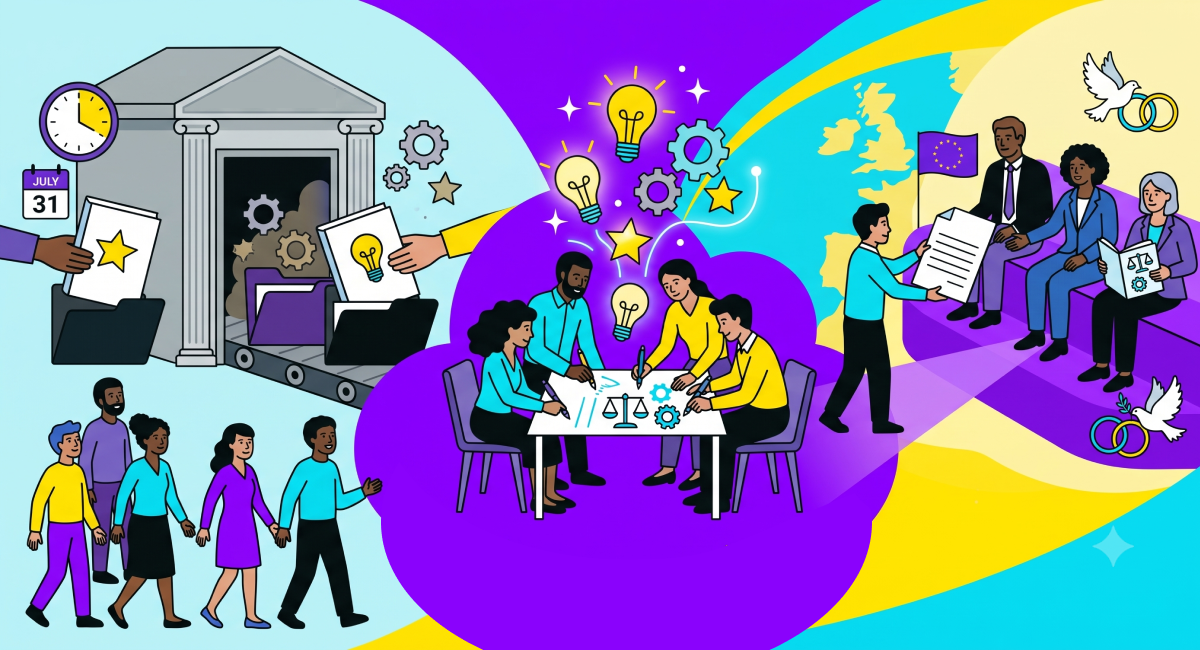
What happens to everything an EU project learns when the project ends? Too often, the answer is: it gets archived. A final report goes into a portal, the consortium moves on, and the insights that took three years and thousands of conversations to earn quietly gather dust. This month, as DIGISET enters its final stretch before closing in August, we chose a different route. We wrote our lessons down for the people who make the rules.
Policy recommendations, delivered to Brussels
On 30 June, our partners at Eurecat submitted Deliverable D5.2, Policy Recommendations, to the EU Portal — the distilled policy voice of everything DIGISET has learned about the digital transformation of social economy enterprises across Europe.
This document did not appear out of thin air. It was prepared by Laura Armayones and Lluc Segura of Eurecat with Jeanne Bretécher of the Social Good Accelerator, reviewed by our own Esztella Rostási, and built on the accumulated experience of the whole consortium: Impact Hub Network, the City of Amsterdam, Cluj IT Cluster, the Université Libre de Bruxelles and FARI — AI for the Common Good Institute.
Why does a policy deliverable matter? Because social economy organisations — the cooperatives, social enterprises and mission-driven SMEs that employ millions of Europeans — are too often an afterthought in digital policy. D5.2 puts their needs on the record, in fourteen concrete recommendations addressed to European, national and regional policymakers.
A seat at the table
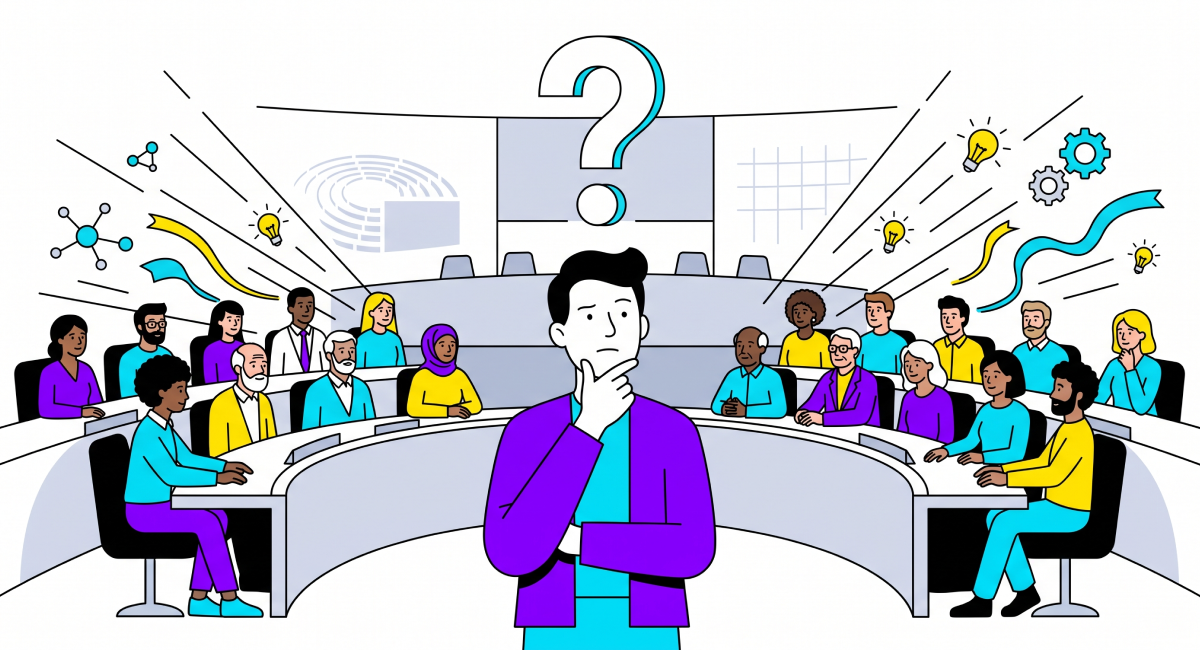
The first cluster of recommendations is about representation. Social economy organisations are increasingly recognised as beneficiaries of digital initiatives — but they are rarely in the rooms where digital priorities, regulatory frameworks and funding programmes are designed.
Our DIGISET project recommends that the European Commission establish a dedicated focal point for the Digital Social Economy within DG CNECT, working closely with DG EMPL, and that social economy and civil society representatives be systematically included in expert groups and consultations on AI, data governance, digital skills and EU funding. We also call for harmonised definitions and classifications of social economy actors across Member States — because today, diverging national interpretations still create real barriers to participating in EU-funded programmes. And we ask policymakers to practise what the social economy preaches: co-creation. Activities co-designed with social SMEs during DIGISET generated far higher engagement than anything designed top-down. Policy should work the same way.
Support that meets organisations where they are
The second cluster is about how support is delivered. One-size-fits-all digitalisation programmes don't work: participants arrived at DIGISET workshops with wildly different levels of digital experience, which is why we recommend differentiated support pathways based on digital maturity, with assessment tools built for the social economy.
On artificial intelligence, our workshops revealed a mixed but genuinely open attitude: social entrepreneurs see AI's potential to reduce administrative burdens and amplify their mission, but they want to engage with it safely and ethically. DIGISET therefore calls for accessible, modular, SSE-specific AI literacy resources — covering not only the opportunities, but also AI's environmental footprint, its social risks, and the danger of dependency on commercial platforms. We also recommend helping social SMEs identify realistic AI use cases (most don't reject digitalisation — they just don't know where to start), and strengthening collaboration with European Digital Innovation Hubs so social enterprises can experiment with advanced technologies without major upfront investment.
Built to last: commons, intermediaries and stable funding
The third cluster tackles sustainability — the quiet crisis of EU project work. Knowledge, networks and trust built during a project risk vanishing when the funding ends. DIGISET recommends integrating digital transformation support into long-term, stable funding frameworks, moving beyond project-based logic towards sustained ecosystem investment.
Two further recommendations are especially close to our heart at CollectiveUP. First: recognise and fund social economy organisations as digital intermediaries — the trusted bridges between policy and social SMEs. Our experience confirmed that trust-based, one-to-one outreach through these intermediaries outperforms any generic communication campaign. Second: invest in Digital Commons for the Social Economy — open-source software, shared infrastructures and community-governed platforms, aligned with EuroStack and the Digital Commons EDIC — so that social enterprises can reduce their dependency on proprietary providers and help build a democratic, sovereign European digital ecosystem. The full set of fourteen recommendations, including a data and AI governance framework and mutualised cybersecurity support for the social economy, is available in the deliverable.
The conversation has already started
Policy documents only matter if someone carries them into the room. On 8 July 2026, our CEO Liliana Carrillo represented DIGISET and its policy recommendations at the DO Impact’ Diesis Network fireside chat "From Projects to Policy: Lessons for the Digital Future of the Social Economy" — exactly the conversation D5.2 was written to feed, alongside policymakers and social economy leaders from across Europe.
And while DIGISET the project ends in August 2026, DIGISET the community does not. Our open Discord server stays alive as the meeting place for everyone working on digital transformation in the social economy — practitioners, tech providers, researchers and policymakers alike. Join us at https://discord.gg/DzfrXtAc
What comes next — and an invitation
We are already designing the next chapter of this work, and we are actively looking for partners who share this agenda — from consortium leads preparing bids to tech providers who want to work with social SMEs through our open Memorandum of Understanding call. Next week on this blog, we'll share exactly which upcoming EU calls we're building for and what we bring to a consortium. If you don't want to wait: get in touch at liliana.carrillo@collectiveup.be or connect with us on LinkedIn.
DIGISET is co-funded by the European Union under the COSME programme. Views and opinions expressed are those of the authors only and do not necessarily reflect those of the European Union or EISMEA. Neither the European Union nor the granting authority can be held responsible for them.
#DIGISET #SocialEconomy #PolicyRecommendations #DigitalTransition #DigitalInclusion #DigitalCommons #AIliteracy #COSME #EUPolicy #CollectiveUP