Children become urban researchers


What does a city look like when viewed through the eyes of the next generation? At CollectiveUP, we believe that "Transforming Together" means including every voice—especially those that are often overlooked in urban planning.
This week in Ghent, we put that belief into action. We are thrilled to share the story of our first Civic Lab activities for the CONIFER project, in collaboration with our long-time partners at Freineitschool Keerpunt. Their mission—“A high school where children learn and feel at home”—provided the perfect atmosphere for three days of deep learning and civic engagement.
A three-day journey of discovery
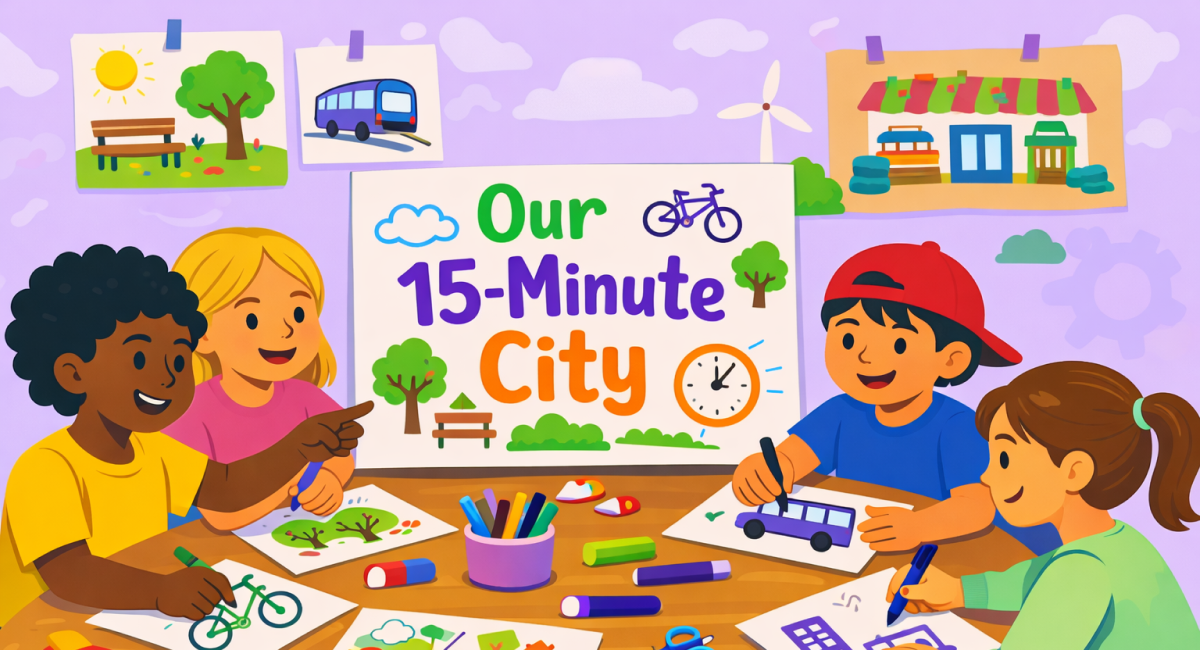
Our Civic Lab wasn't just a classroom exercise; it was a hands-on research mission to explore the 15-minute city concept.
- Tuesday: The Discovery Phase We kicked things off by introducing the students to the "city of 15 minutes." Equipped with a dedicated web-app survey, we headed out for a walkshop to explore two key areas near the school, specifically focusing on the surroundings of the Dampoort train station.
- Wednesday: The Creative Process After gathering raw data and personal observations on Tuesday afternoon, the students spent Wednesday synthesizing their findings. They began crafting detailed research posters, translating their street-level experiences into visual data.
- Thursday: The Advocacy On Thursday morning, the atmosphere was electric. Students practiced how to present their findings and defend their urban design ideas. They did an outstanding job, presenting their posters as a formal contribution to the ongoing CONIFER research.
Key insights: Through children’s eyes
The findings were as practical as they were profound. When we asked students what made their walk easy or difficult, they didn't just look at the map; they looked at the reality of the streets.
“The floor is unstable.” > Students identified that the walk to Dampoort station is physically challenging because the tiles are loose. They immediately recognized that what is a "tripping hazard" for them is a major barrier for someone in a wheelchair or a parent with a buggy.
The students also highlighted:
- Environmental Quality: A lack of greenery and an abundance of garbage on the streets made their routes feel less pleasant.
- Social Empathy: In a moving display of civic care, the students pointed out the homeless individuals sleeping at Dampoort station to stay warm. Their recommendation? The city must prioritize placing more homes for the homeless in these areas.
Why this matters
This Civic Lab proved that children are not just "future" citizens—they are active citizens today. By identifying mobility challenges and advocating for social warmth, these students are helping CONIFER build a more inclusive, accessible Ghent.
We are incredibly proud of the Keerpunt students for their hard work and their vision. They reminded us that a city that feels like "home" is one that cares for its most vulnerable and ensures that everyone can move safely through its streets.
Stay tuned as we continue to process this data and move forward with the CONIFER project!
🔗 Learn more about the project: conifer15.eu 🏫 Discover our partners: keerpuntscholen.be