Building a truly inclusive workspace for Belgian SMEs


Imagine a talent pool where half the doors remain closed. In Flanders today, that is a reality: the employment rate for people with disabilities stands at only 48.2%. While the "war for talent" makes headlines, a vast demographic of skilled, dedicated individuals is still bumping into a less-than-inclusive labor market.
A recent study by the Koning Boudewijnstichting made it clear—the barriers are not just physical; they are often systemic and cultural. As the Belgian partner for the European Skills Plus project, we are working to lower those barriers. For the past several months, we have been immersed in "Work Package 4," collecting the best practices, legal frameworks, and—most importantly—the human stories that prove an inclusive workspace isn't just a moral goal; it’s a professional advantage.
Why SMEs hold back (and why they shouldn’t)
Most Small and Medium-Sized Enterprises (SMEs) have the heart for inclusion but feel they lack the "map." There is a common fear that accommodating a disability requires expensive renovations or specialized medical knowledge.
Our research across seven European countries shows that the opposite is often true. Inclusion usually starts with a shift in culture and a few intentional, low-cost adjustments. To bridge this knowledge gap, we are developing the "Inclusive SMEs Toolkit." This resource is being built specifically for employers who want to focus on capabilities rather than limitations.
The Heart of the Project: Testimonials that Inspire
The most powerful part of this toolkit is the collection of real-world experiences from those already leading the way. It has been an honor to document the journeys of Maria-Cristina, Daithi, and Liliana—three individuals who show that "accessibility" is often synonymous with "good management."
Maria-Cristina Ciocci: Creating a Culture of Safety At De Creatieve STEM in Ghent, founder Maria-Cristina Ciocci views inclusion as a lived practice. Her makerspace is designed to be a "safe space" where the pressure to be perfect is removed.
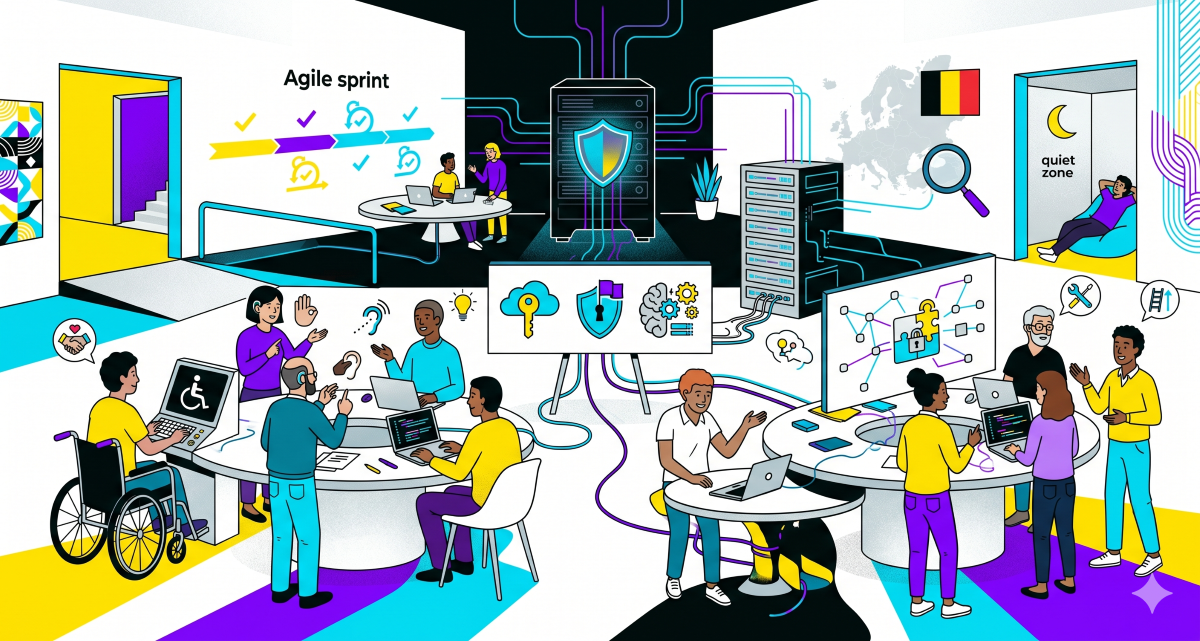
- The practice: By strictly limiting group sizes and providing "quiet zones" for those who need to work in isolation, she ensures that neurodiverse team members aren't overwhelmed by sensory input.
- The philosophy: At DCS, making mistakes is seen as the primary way to learn. By adapting the task to the person—rather than forcing the person into a rigid box—she has built a team that is both loyal and innovative. This is the same at Keerpuntscholen, coach Kirsten De Maere told us of the importance of creating a safe space where mistakes can be made!
Daithi (SecondYou) and Liliana (CollectiveUP): The power of the "Micro-Adjustment" Within our own workspace, our colleagues Liliana and Daithi have pioneered ways to manage chronic pain, hearing impairments, and high sensitivity without sacrificing productivity.
- Energy and pain management: Instead of a rigid 9-to-5 desk policy, the team utilizes walking meetings to keep the body moving or allows for working from a sofa when physical comfort is a priority.
- Agile planning: By using the Agile methodology and Trello boards to plan weekly "sprints," team members can manage their own energy levels and prioritize tasks effectively.
- Democratic communication: To support those with hearing impairments, the team follows a "one-at-a-time" speaking rule in meetings. This simple practice ensures that everyone—especially those using hearing devices—can follow the conversation clearly and participate equally.
What to expect from the inclusive SMEs toolkit
This toolkit isn't just a document; it’s a practical guide to transforming your business. We are packing it with:
- Accommodation checklists: Simple tools to help you and your employees identify what they need to do their best work.
- Inclusive recruitment templates: Examples of how to write job ads that focus on skills and encourage diverse candidates to apply.
- National guidance: A clear breakdown of Belgian legislation and the financial incentives available to SMEs who hire inclusively.
- Onboarding blueprints: Practical tips like "buddy systems" and visual instructions to make the first 90 days a success for everyone.
Moving forward together
Inclusion is a practice, not a one-time project. When we create a workspace that accommodates a person with a disability, we often find we’ve created a workspace that is better for everyone. Flexible hours, clearer communication, and a focus on well-being are "universal designs" that help every employee thrive.
We are excited to share the full results of our European research and the finalized toolkit very soon. By turning awareness into action, we can help move that 48.2% statistic in the right direction and ensure that every talent in Flanders has a place to grow.
Join the movement. Explore the project at www.skillsplus.eu or reach out to us at www.collectiveup.be/contact or via email to learn how your organization can become a leader in inclusive employment.