24 handshakes: The partnerships that outlived the project


A Memorandum of Understanding is, on paper, the least impressive document in European project management. It is not a contract. It obliges nobody to spend a euro. You could tear one up on a Tuesday and face no consequence on Wednesday.
And yet, over the past six months, 24 of them have been signed across Europe under the DIGISET banner — between social enterprises and technology providers who, in almost every case, had never met before we put them in the same room. Some are already meeting monthly. One pair connected over a monetisation problem and ended up with an introduction to a Spanish investor. Another is building an accessibility platform together.
We want to use this post to do one thing: say thank you, by name, to everyone who made that happen.
What a MoU actually does
The DIGISET Collaboration MoU was designed to be almost weightless. It reflects good-faith intentions and is explicitly not legally binding. It imposes no financial obligations. Any real commitment — a service agreement, a licence, a budget — has to be negotiated separately afterwards.
That weightlessness is the entire point.
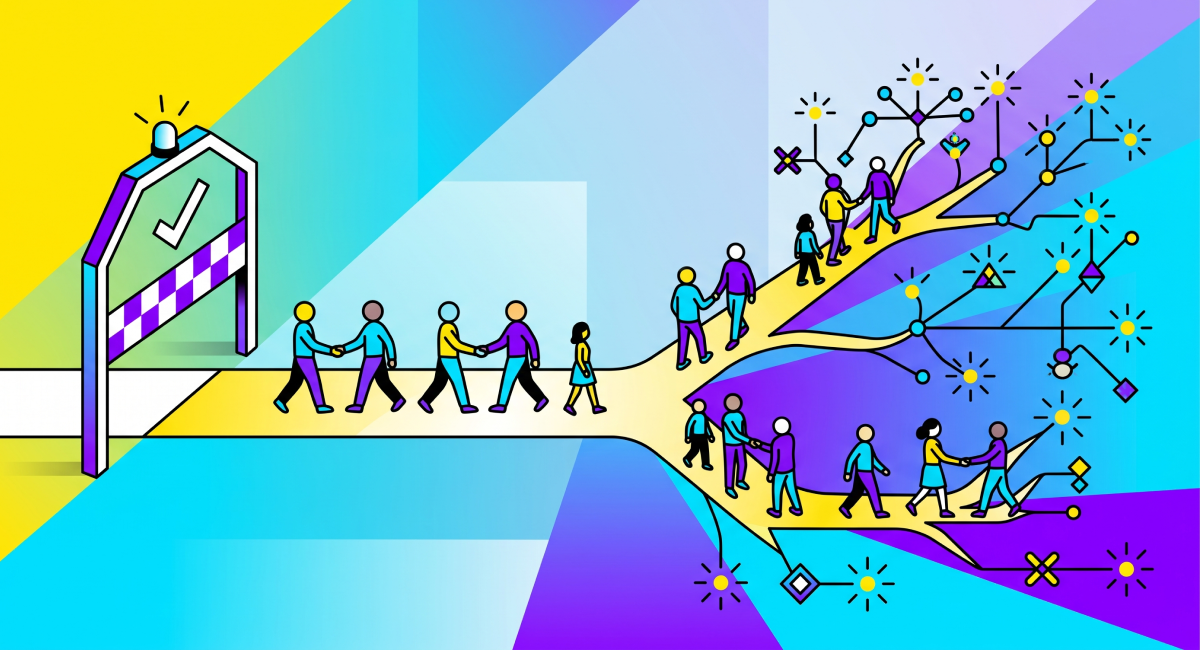
The hardest moment in any new partnership is not the contract. It is the second conversation — the one after the friendly first call, when both sides quietly wonder whether the other is serious enough to justify more time. The MoU exists to get people over exactly that hump. It costs nothing, commits nothing, and yet changes something: it turns "we should talk again sometime" into a shared, dated, signed intention. Two names on one page.
What each signatory agreed to was modest and concrete. The social enterprise brings its real needs and challenges, and gives honest feedback on whether the technology actually works in its context. The technology provider brings tailored solutions suited to organisations that do not have enterprise budgets. Both agree to look for funding opportunities and open calls together. DIGISET provides advisory support, facilitation, coordination — and visibility.
That last one matters more than it sounds. Part of what the project promised was to amplify these collaborations through official channels. This post is us keeping that promise.
The five partners who made the introductions
MoUs do not sign themselves. Behind every one of them is somebody who noticed that two organisations in their network needed each other, and then did the unglamorous work of following up until both had signed.
Five DIGISET partners did that work:
- Impact Hub Network — whose reach across European cities turned single introductions into repeatable ones. Ksenia Gavrilina in particular ran the matchmaking and follow-up choreography that converted conversations into signatures.
- Cluj IT Cluster — connecting Romanian technology companies with social organisations that had never had a route into that sector.
- Eurecat — the largest single contributor, matching Catalan social economy organisations with technology partners across an established regional ecosystem, and stewarding the whole MoU process as a project deliverable.
- Social Good Accelerator (SOGA) — bringing its European advocacy network into contact with practical technology partners.
- CollectiveUP — our own contribution came almost entirely out of the DIGISET Collaboration Lab (more on that below).
Each of these organisations was working its own network, in its own language, against its own regional realities. The fact that the totals add up to 24 is a result of five separate efforts, not one central campaign.
The partnerships themselves
Here is what was actually signed. Every organisation below agreed to have their collaboration made public — that visibility is written into the MoU itself, and it exists precisely so that other organisations can see that this is possible.
Matched by Cluj IT Cluster:
Matched by Impact Hub Network:
- Impact Hub Florence and leonardo.impact.ai
- Impact Hub Zagreb and leonardo.impact.ai
- Impact Hub Stockholm and leonardo.impact.ai
Matched by Eurecat:
- Facto and Basetis
- Facto and El Garbell
- Facto, Barcelona Activa and OEIAC
- Jamgo and Marianao
- Jamgo and L'Apòstrof
- El Garbell and La Agrícola
- Circula Cultura and Fàbrika Grafika
Matched by Social Good Accelerator:
Matched by CollectiveUP with Impact Hub Network, following the Collaboration Lab:
- Enblissed and GenOrg.ai
- Enblissed and C-Nery
- Enblissed and Oscar Guti
- Facto and Oscar Guti
- Celina Oduber and Oscar Guti
Read that list again and notice something: several names appear more than once. Facto, El Garbell, Jamgo, Enblissed, leonardo.impact.ai. Organisations that signed one MoU tended to sign another. Once an organisation experiences a working match, it wants more of them — which is the closest thing to proof we have that this mechanism does something real.
What one afternoon in July produced
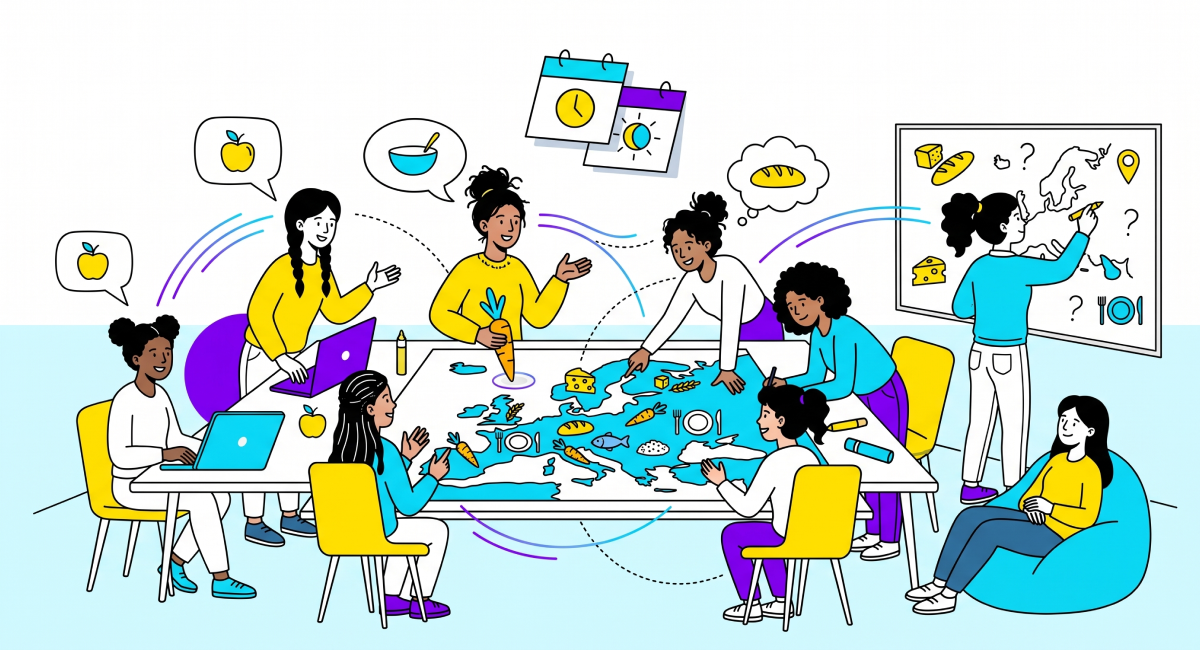
CollectiveUP's own MoUs came almost entirely from a single 90-minute online session on 29 July: the DIGISET Collaboration Lab, run with Impact Hub Network.
The format was deliberately unlike a webinar. Everyone invited was given a role in advance — solution provider or social enterprise — and asked to prepare a short introduction, so nobody arrived as an audience member. There was a keynote from Bryan Cassady on working with AI, showcases from technology providers, and then facilitated matchmaking in mixed rooms. Within minutes of the session closing, every participant received a message naming the specific person they had spoken with and suggesting the obvious next step.
Five MoUs were signed in the fifteen days that followed.
The lesson we are taking into the autumn is that the event was never the product. The choreography around it was — the personal invitation, the assigned role, the mixed room, the same-day follow-up, and a document light enough to sign without consulting a lawyer.
What happens next
DIGISET closes this month. The MoUs do not.
None of these agreements depend on the project continuing, and the community is not going anywhere either — the DIGISET Discord stays open, and every organisation above is welcome to keep using it: https://discord.gg/DzfrXtAc
We are also bringing the format forward. In October, the Collaboration Lab returns as a standing quarterly event, co-hosted by CollectiveUP and Impact Hub Network — this time built around European funding calls. The premise is the same, with a sharper edge: organisations arrive knowing which call they are interested in, we facilitate the matchmaking, and partnerships form against a real deadline rather than a vague someday. Date and registration to follow shortly.
If your organisation wants to be in that room — as a technology provider, as a social enterprise, or as a partner looking for a consortium — tell us now and we will make sure you get the invitation first. One email is enough: liliana.carrillo@collectiveup.be
And to everyone who signed: thank you. You made a non-binding piece of paper mean something.
DIGISET is co-funded by the European Union under project number 101167934. Views and opinions expressed are however those of the author(s) only and do not necessarily reflect those of the European Union or EISMEA. Neither the European Union nor the granting authority can be held responsible for them.
#DIGISET #SocialEconomy #DigitalTransformation #Partnerships #SocialEnterprise #EUfunded #CollaborationLab #ImpactHub #CollectiveUP